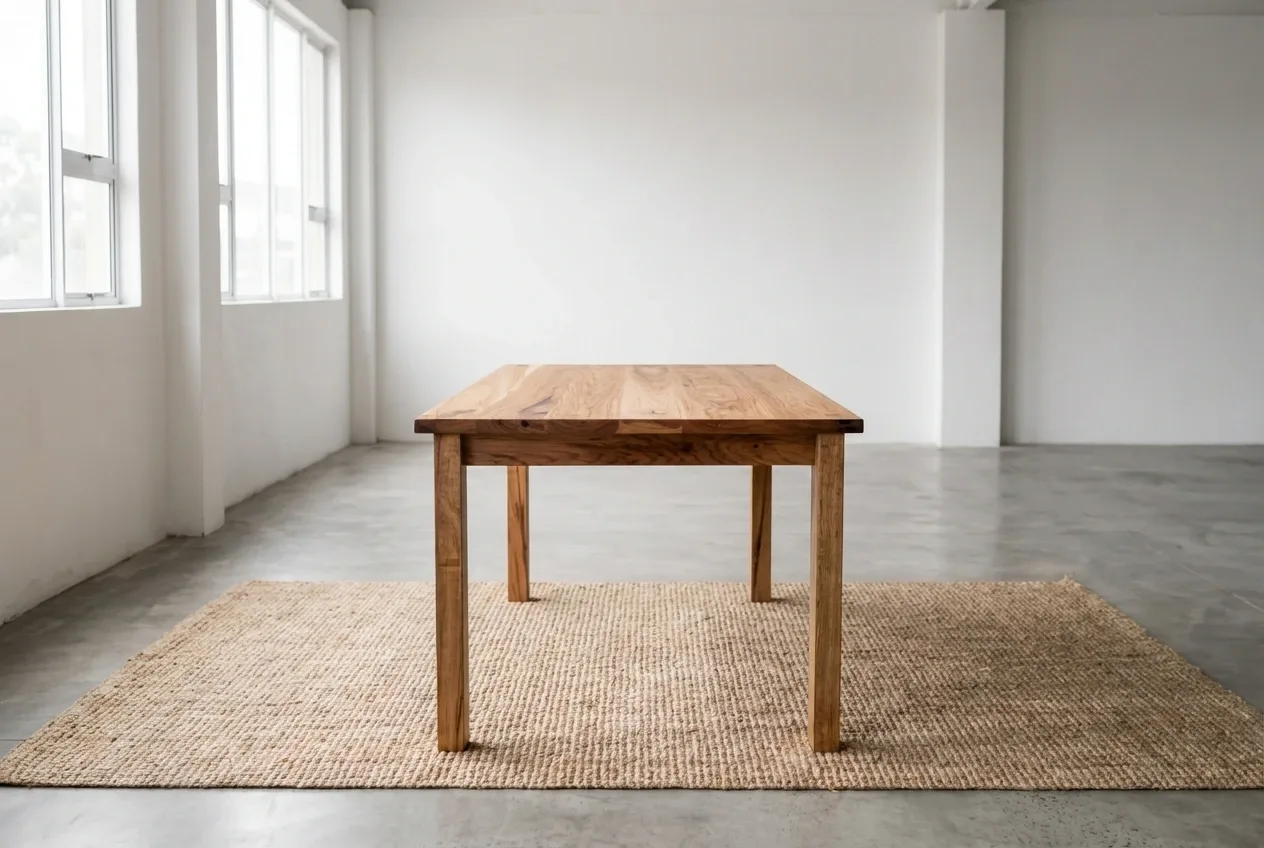
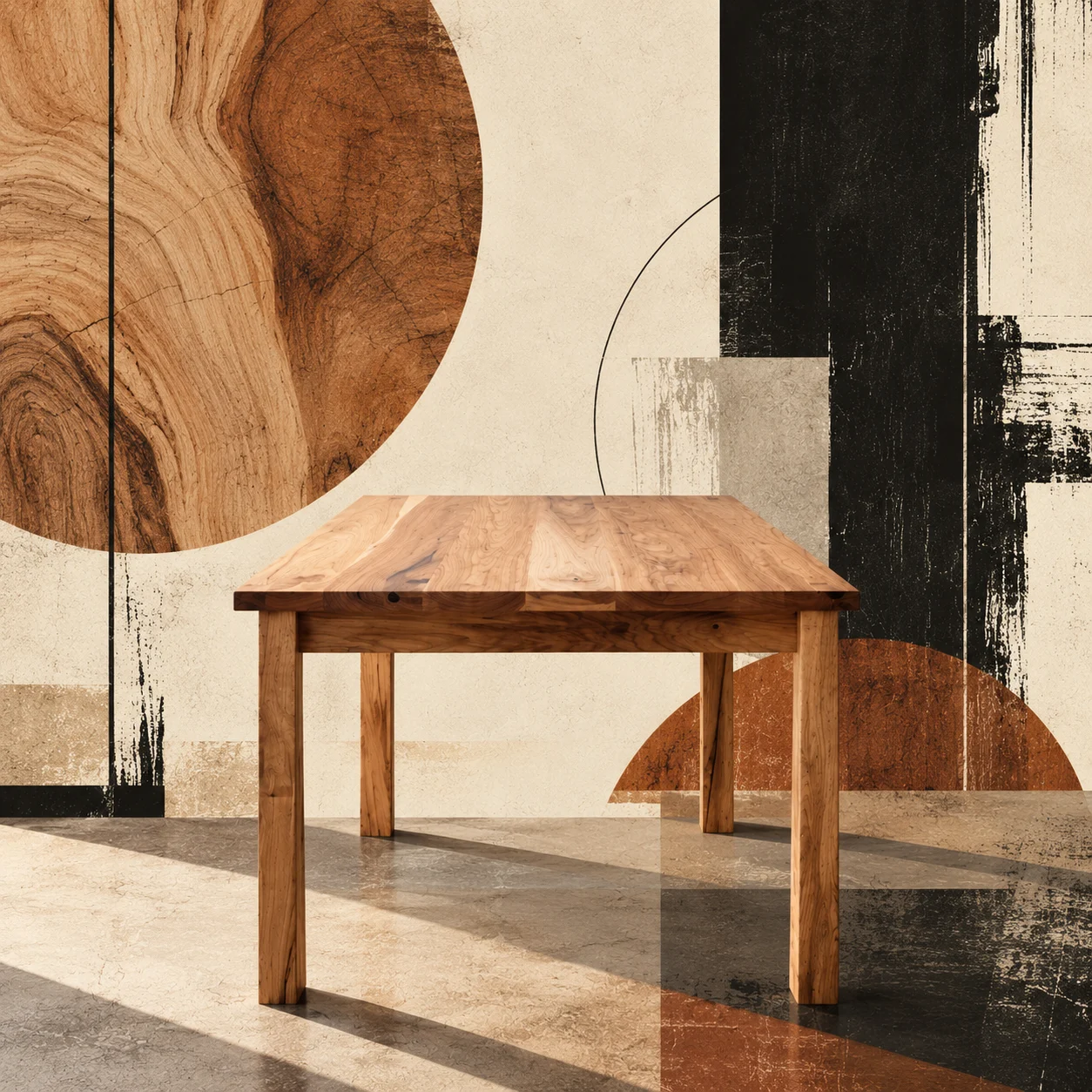
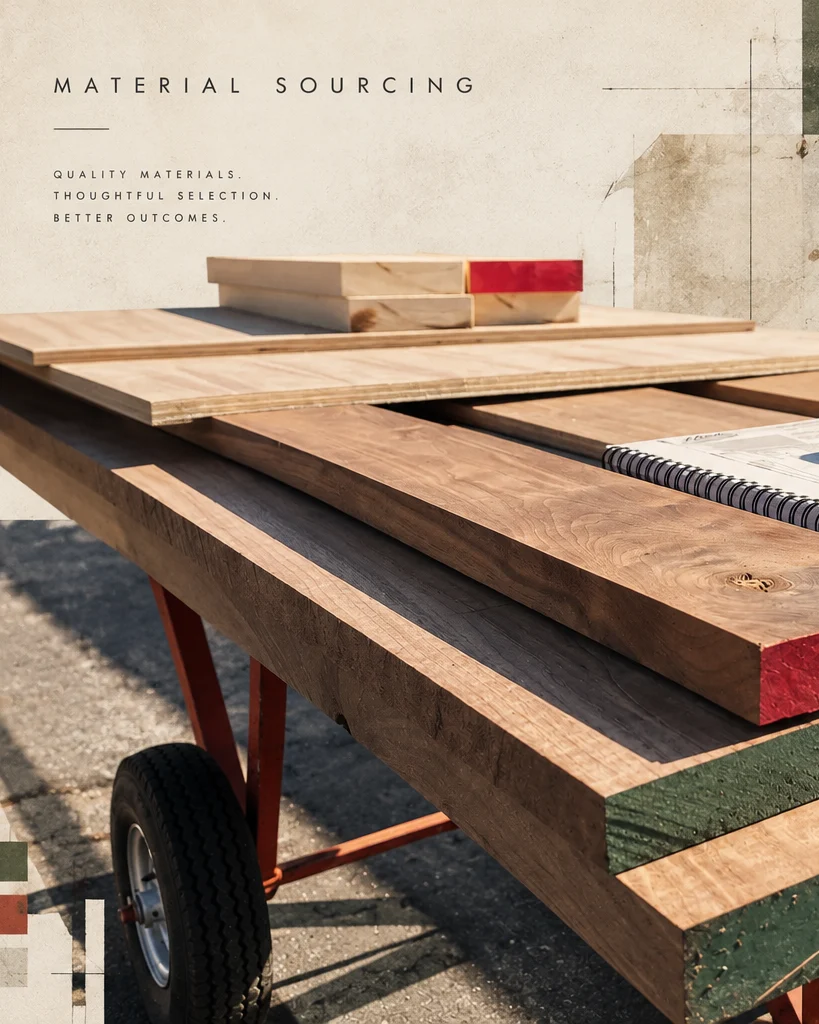
The grain shifts hard from board to board — light to dark, straight to wild, calm to broken without warning. It carries tension through the cut. It moves when it's opened. It resists being brought into alignment and shows it when you try.
That sets the work.
Boards are not selected for similarity. They are selected for how they will resolve together. The read happens before the first cut — where the grain runs, where it breaks, how color moves across the length. The goal is not matching. It is continuity.
Read the Full Article
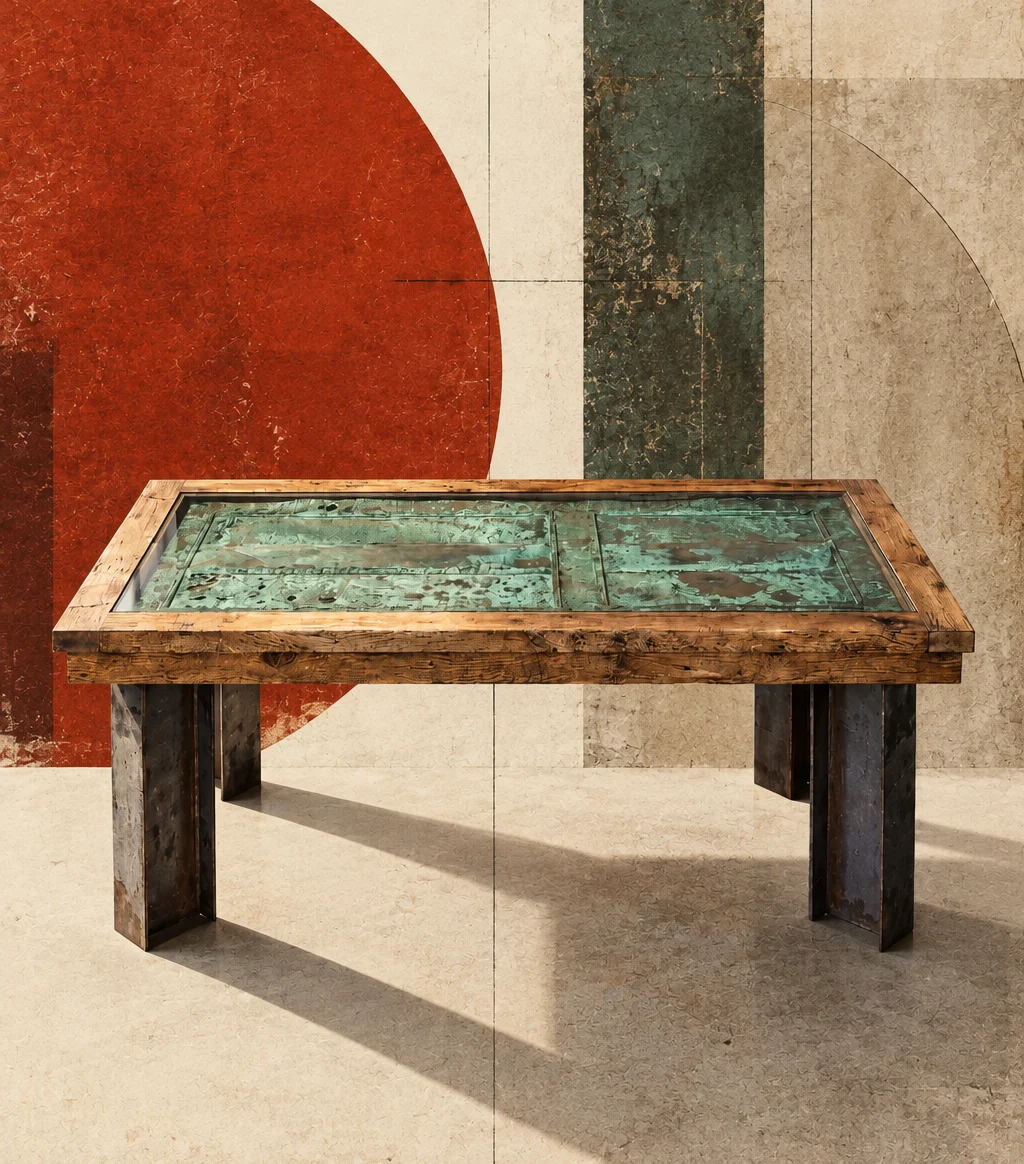
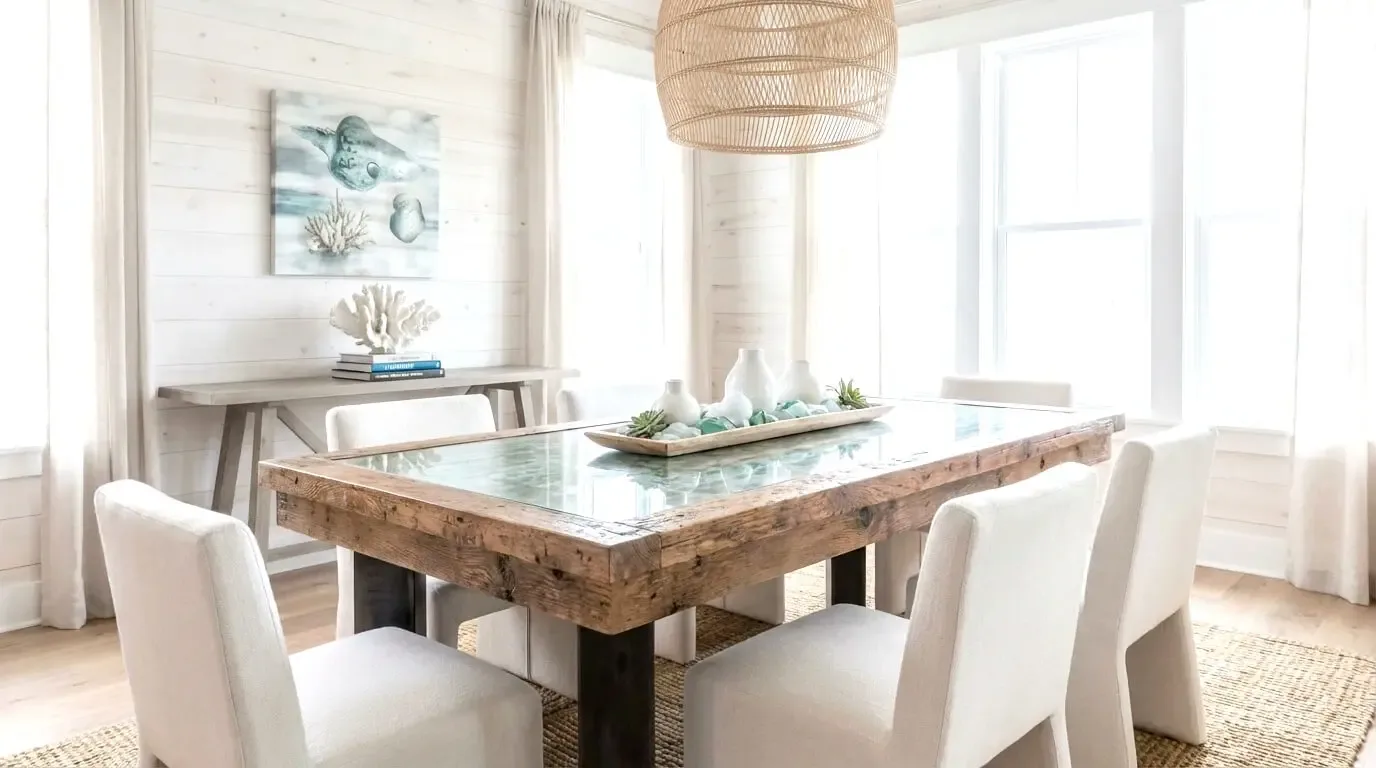
Layers of paint had built and worn back over time, exposing earlier surfaces in irregular patches, while the structure underneath had moved enough that it could not be relied on for flatness or stability. It was not a usable table surface in any conventional sense, and any attempt to bring it into alignment would have removed the very condition that made it worth building around.
The working surface is separated from the material through layered construction, not through correction. The piece is built in section.
Read the Full Article
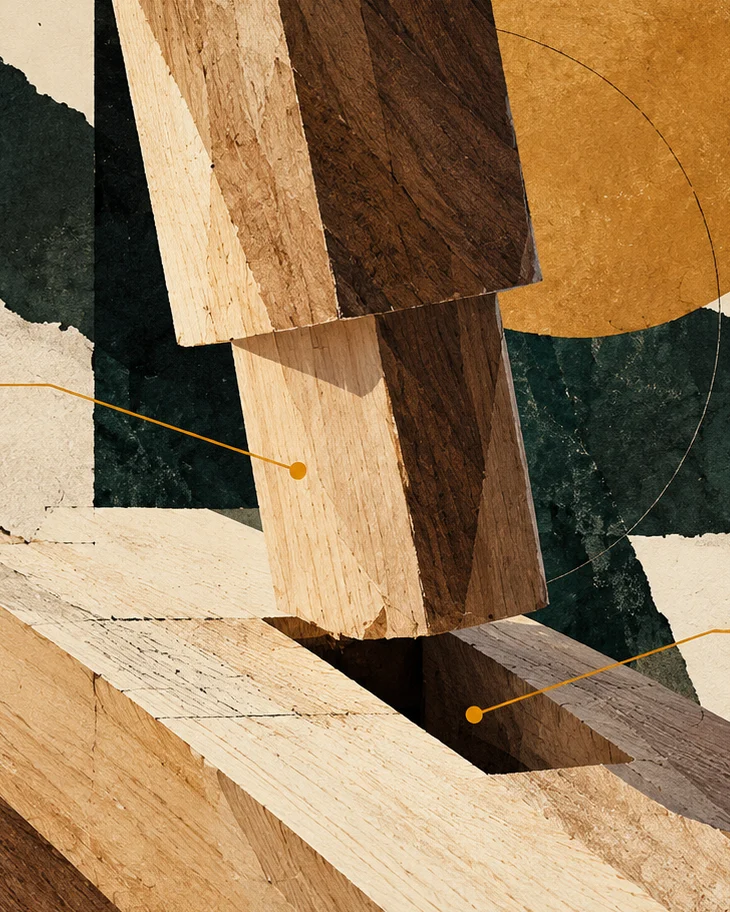
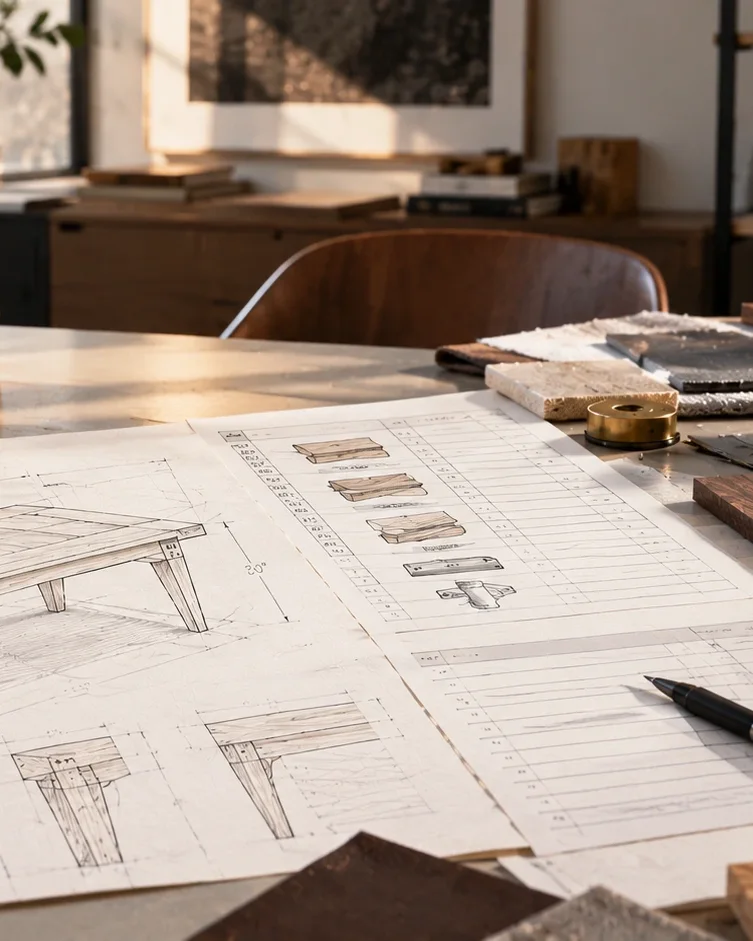
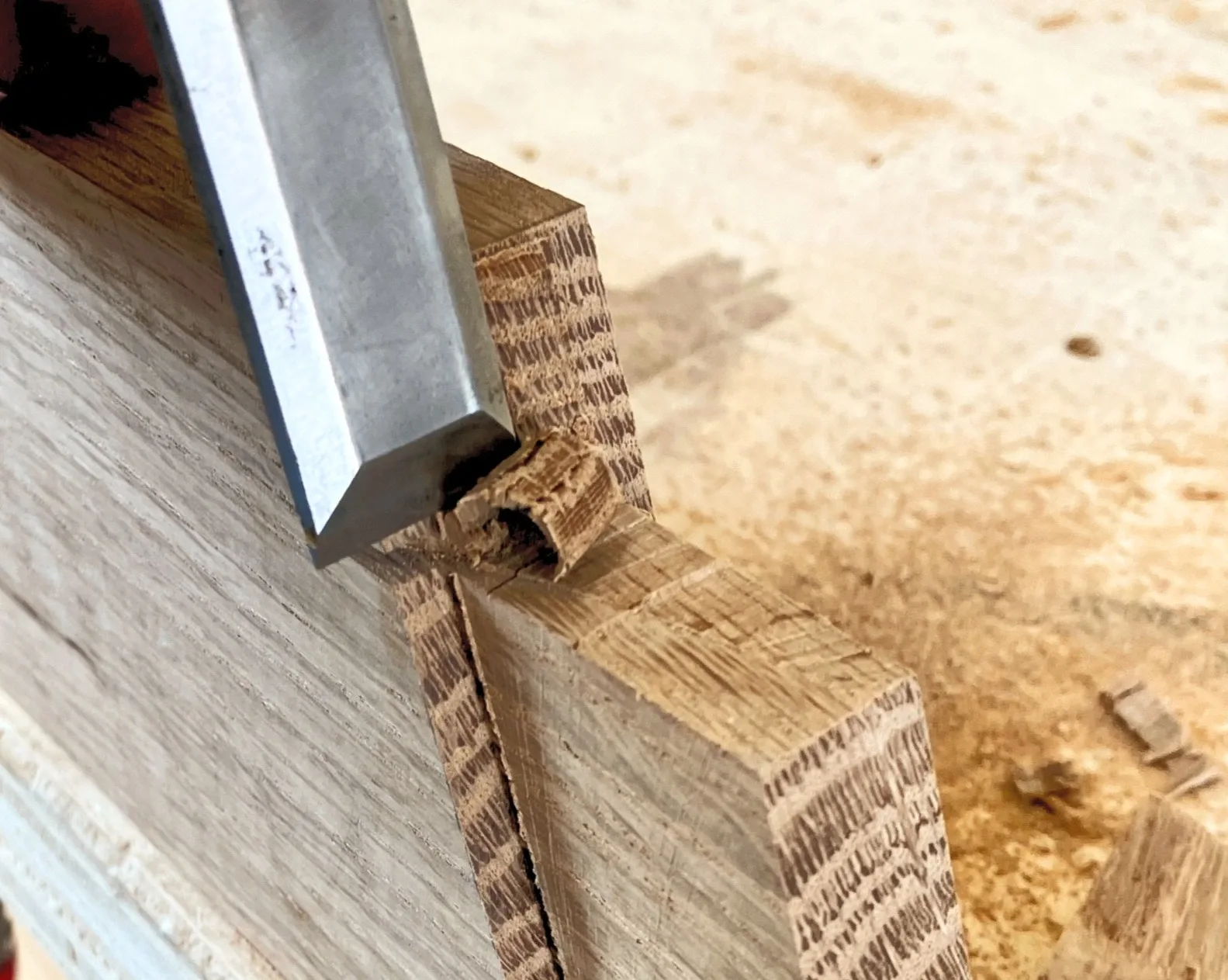
In practice, the joint shows up anywhere a frame needs to carry load—table bases, doors, chairs, cabinet frames. At RSF, it’s used where structure matters over time. Legs to aprons, rails to stiles, internal framing where the connection needs to stay tight through seasonal movement. It is not the fastest method and not always necessary—in sheet goods or non-structural applications, other methods are used. When solid wood members carry load, it is the baseline.
The strength comes from three things: the fit, the shoulder, and the long grain glue surface. The tenon is cut on the end of a board, so its cheeks are long grain. The walls of the mortise are also long grain. When those surfaces meet, they take glue well and hold under load. The shoulders—the flat surfaces around the tenon—register the joint and keep the connected parts aligned. If the shoulders are off, the joint will show it immediately.
Read the Full Article
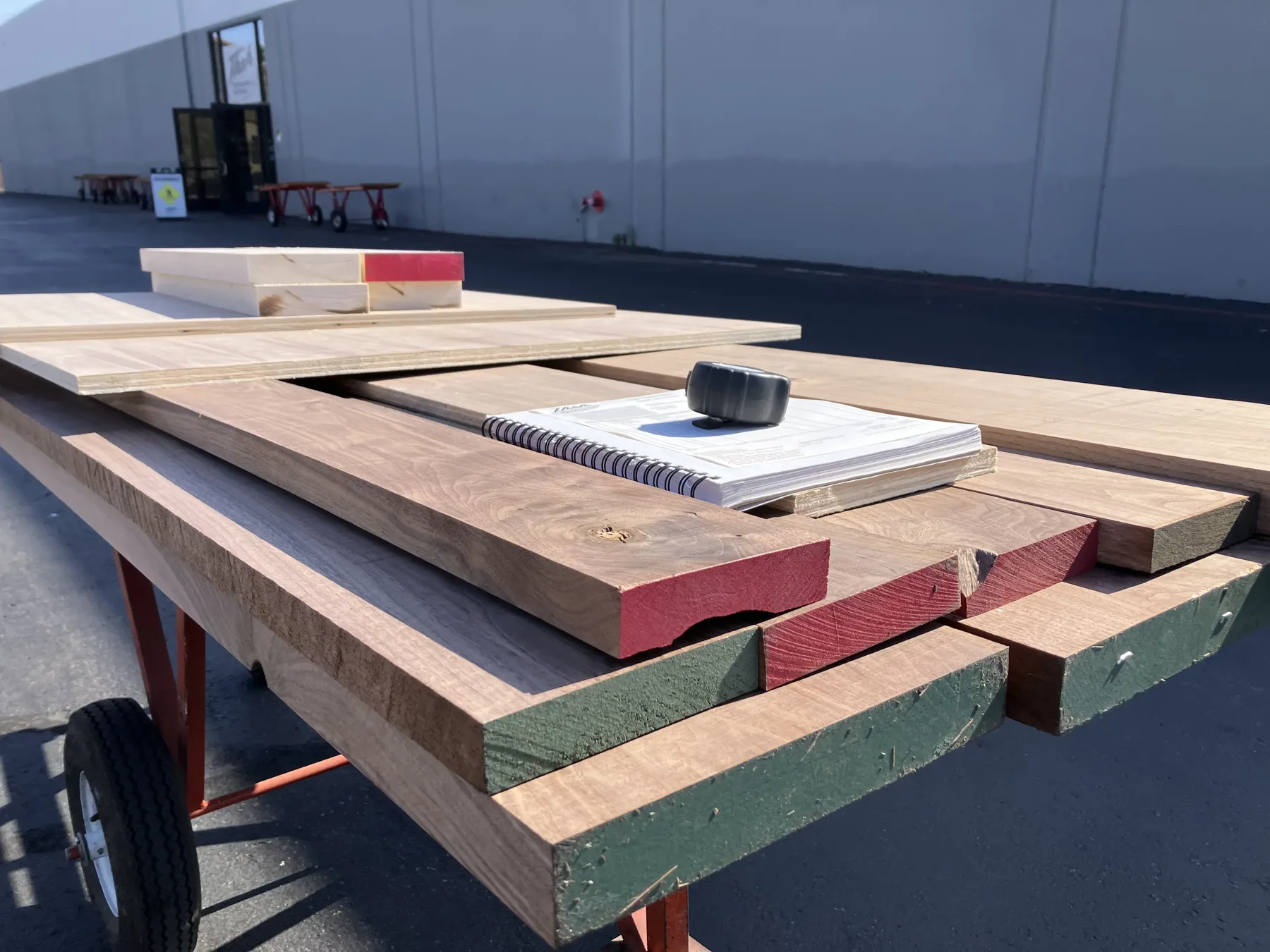
Boards are selected in person. Grain, color, and usable surface are evaluated at the rack with the full build in mind. When necessary, entire units are worked through to establish continuity across a panel. Boards are staged, compared, and restacked after selection. Layout is resolved before breakdown.
That level of access is not standard. It comes from consistency—regular presence, disciplined handling of material, and leaving units in a condition that does not create additional work for the yard. Boards are returned clean, stacks are maintained, and selection is done with control. That allows for the time and space required to pull material at the level needed.
Read the Full Article
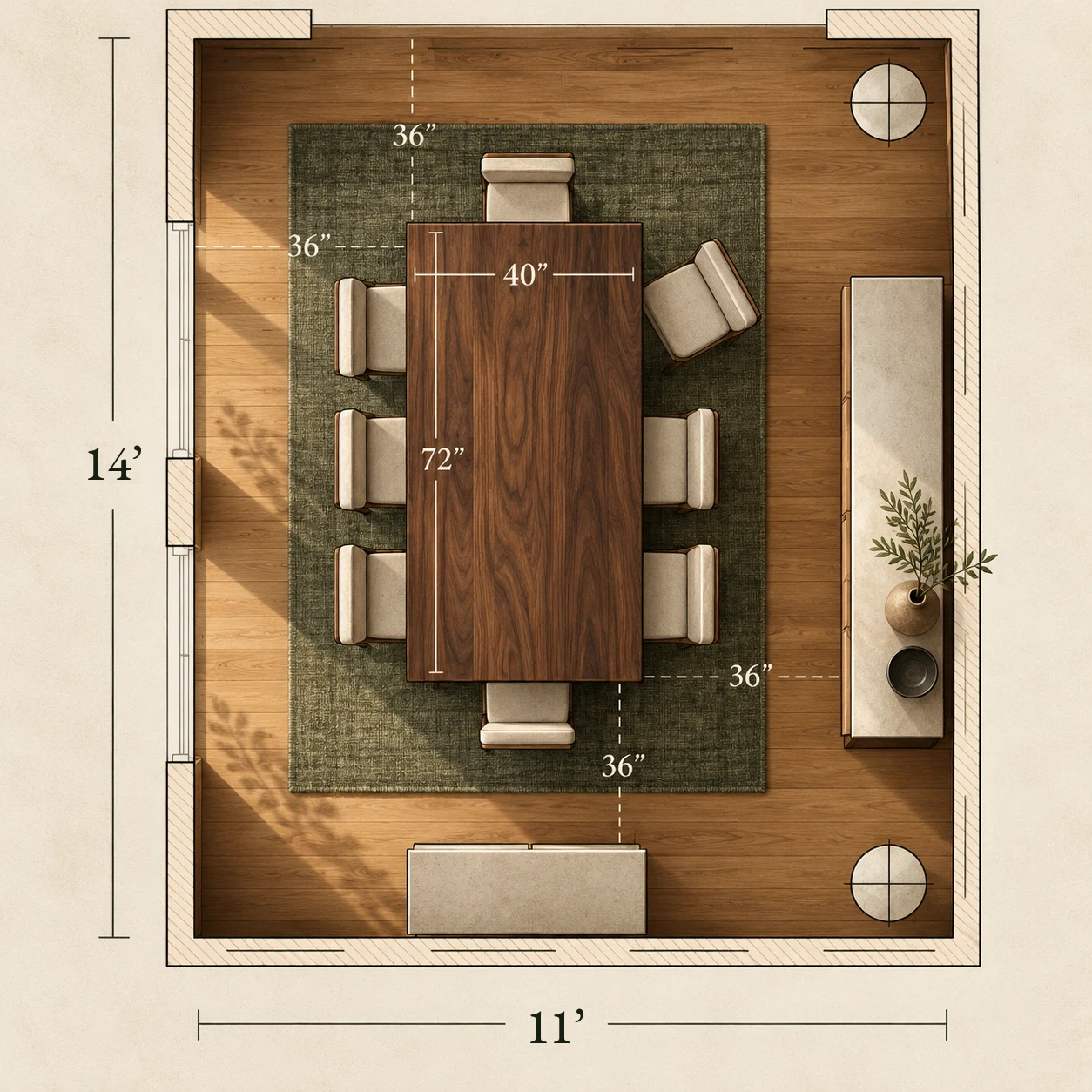
Start with the usable footprint—the area defined by walls, openings, and how people move through the space. That field determines where the table can sit and how it will be used.
Rectangular tables carry length and align with rooms that already move in that direction. They sit well along long walls or in spaces with clear axes.
Round tables center the room and open circulation. They remove corners and allow movement to wrap around them, which is useful in tighter footprints.
Oval tables hold length while softening the ends, easing circulation without losing seating capacity.
Square tables sit evenly in rooms that are already balanced.
This isn’t preference. It’s how the table fits the movement of the space.
Read the Full Article
From the outside, custom furniture pricing looks like a guess. It isn’t. Every quote comes down to three things: the wood, the hours, and the shop doing the work. Here is one table, priced line by line.
Walnut dining table, 1¼" × 40" × 80", seats six to eight. Four legs, aprons, mortise and tenon joinery. A Classic-to-Custom build.
The legs take more walnut than the top. A leg done properly carries its grain around all four sides, and that takes wood.
Read the Full Article
What plays in the shop while the work gets done. On shuffle, the way it actually plays.
Read the Full Article