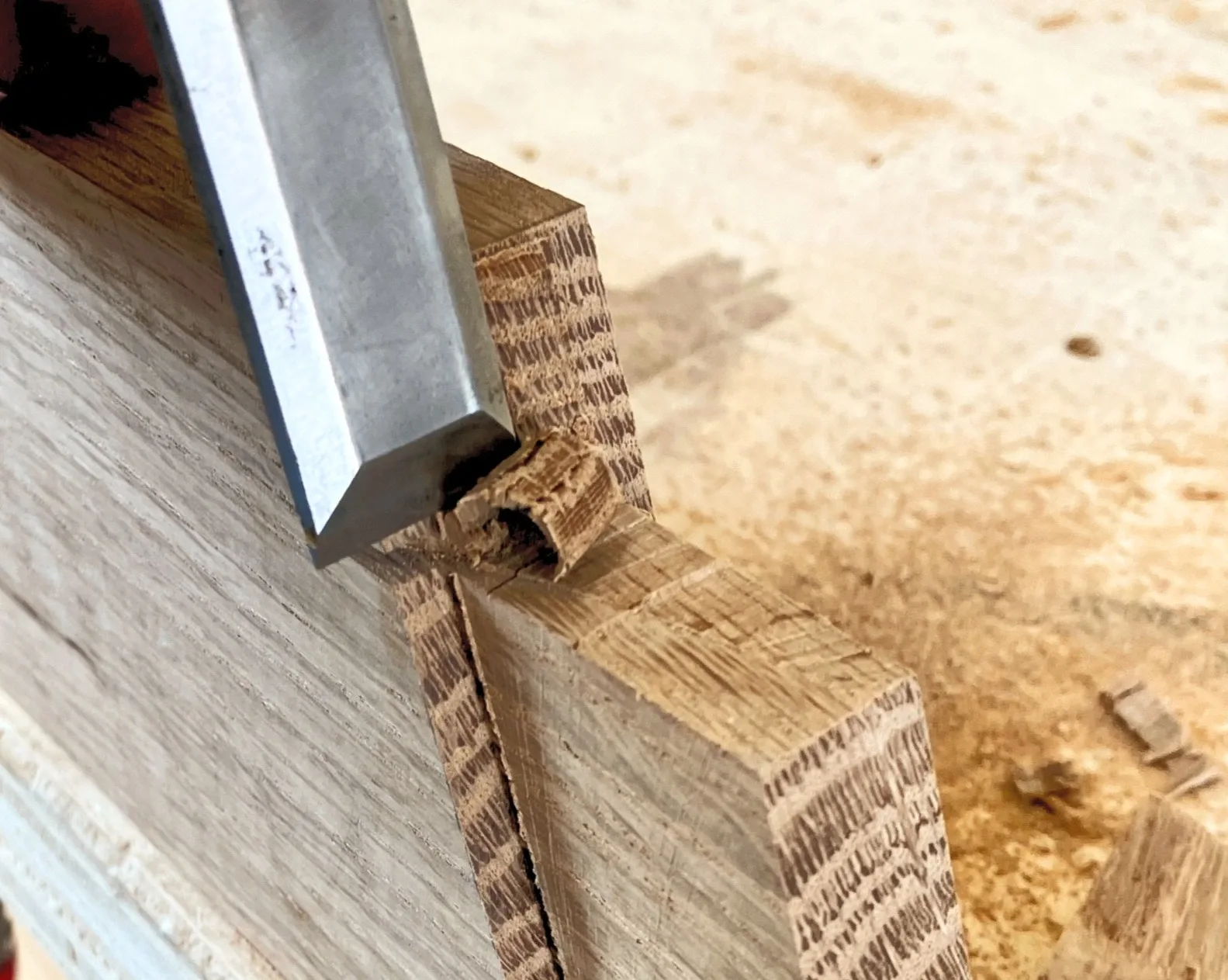
Mortise and tenon is a simple idea: one piece is cut to receive, the other is cut to fit. A cavity (the mortise) and a corresponding projection (the tenon). When they come together correctly, the joint resists movement in multiple directions without relying on hardware. It’s one of the oldest joinery systems still in use because it works.
In practice, the joint shows up anywhere a frame needs to carry load—table bases, doors, chairs, cabinet frames. At RSF, it’s used where structure matters over time. Legs to aprons, rails to stiles, internal framing where the connection needs to stay tight through seasonal movement. It is not the fastest method and not always necessary—in sheet goods or non-structural applications, other methods are used. When solid wood members carry load, it is the baseline.
The strength comes from three things: the fit, the shoulder, and the long grain glue surface. The tenon is cut on the end of a board, so its cheeks are long grain. The walls of the mortise are also long grain. When those surfaces meet, they take glue well and hold under load. The shoulders—the flat surfaces around the tenon—register the joint and keep the connected parts aligned. If the shoulders are off, the joint will show it immediately.
A typical proportion is a tenon that’s about one-third the thickness of the stock. That’s not a rule, but it’s a starting point. Too thin and the joint loses strength. Too thick and you weaken the walls of the mortise. Length is driven by the load and the thickness of the receiving member.
Fit is where the joint succeeds or fails. A proper fit is firm without force. You should be able to seat the joint with hand pressure or light clamping. If it drops in loose, it won’t hold. If it requires heavy force, you risk splitting the mortise or distorting the surrounding material. The goal is consistent contact along the cheeks, with clean, square shoulders that close without gaps.
There are several working variants, depending on the job. Through mortise and tenon passes completely through the receiving member and can be left flush or wedged. Blind mortise and tenon stops short of the surface, keeping the joint hidden. Wedged tenons expand inside the mortise to lock the joint mechanically. Pinned tenons are secured with a dowel that passes through both parts, preventing withdrawal. Stub tenons are used in lighter work where full depth isn’t required. Haunched tenons add a secondary shoulder to keep wider members from twisting. Loose tenons replace the integral tenon with a separate piece seated into matching mortises in both members, an extremely efficient method that still makes a robust joint with incredible strength.
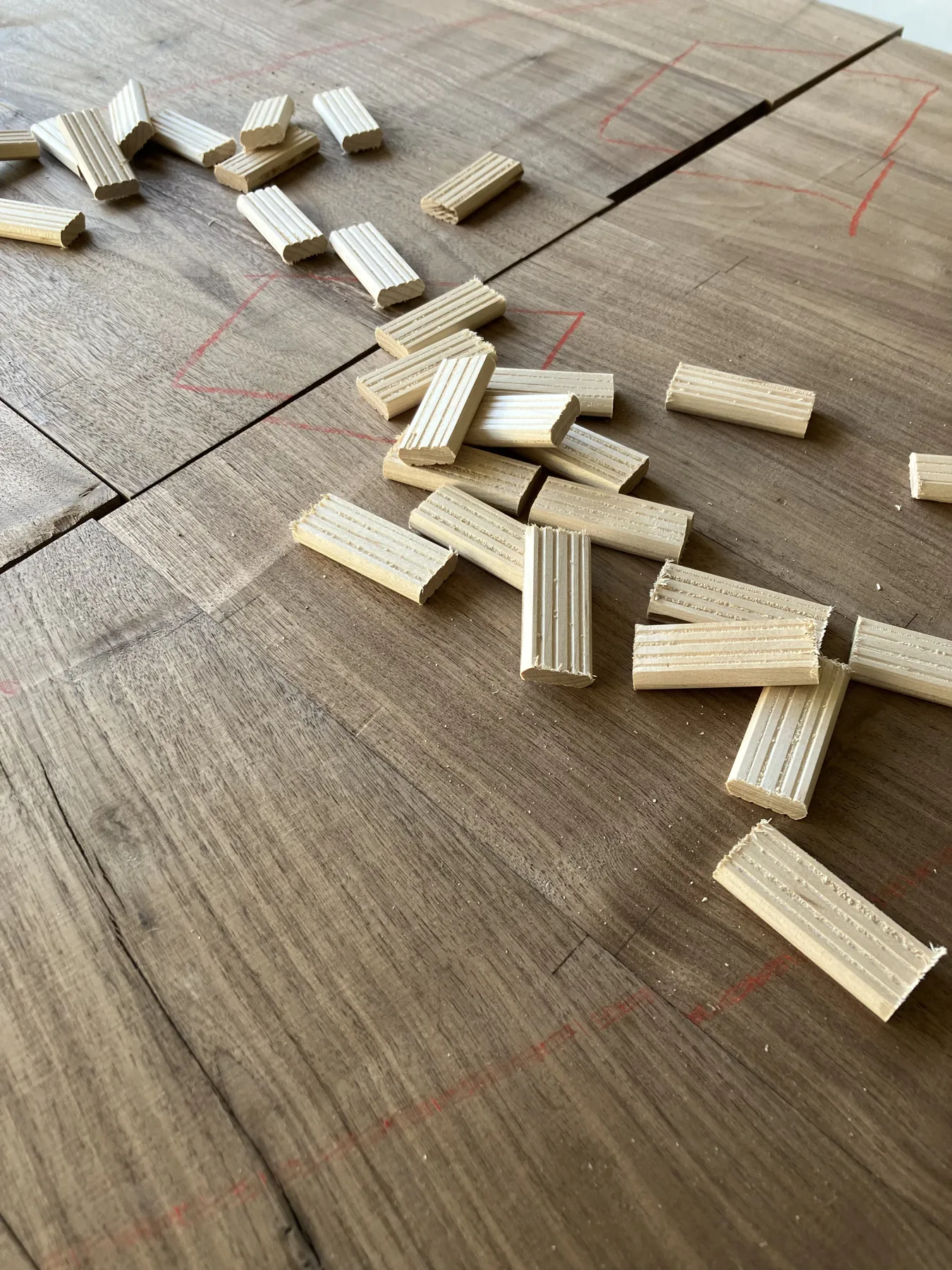
The shop has run most of these. The Hickory dining table base uses through wedged tenons—each leg passes through the top, gets driven home, and locks with opposing hardwood wedges that expand the tenon inside the mortise. The Penn Desk legs are pegged—single stock cut, shaped, and rejoined with the connection secured by a dowel through the joint. The White Oak Coffee Table base and the Walnut Vanities frame are blind mortise and tenon, hidden inside the structure where the joint does the work without being seen. Different variant for each piece, same logic underneath.
Tools matter less than sequence. What matters is that both parts reference the same faces and edges. If references drift, the joint won’t line up even if each part is cut cleanly.
The process typically starts with the mortise. It establishes location and size. The tenon is then cut to fit that cavity. Tenons are left slightly oversized and brought down to final fit with controlled passes. That last step is where the joint is tuned.
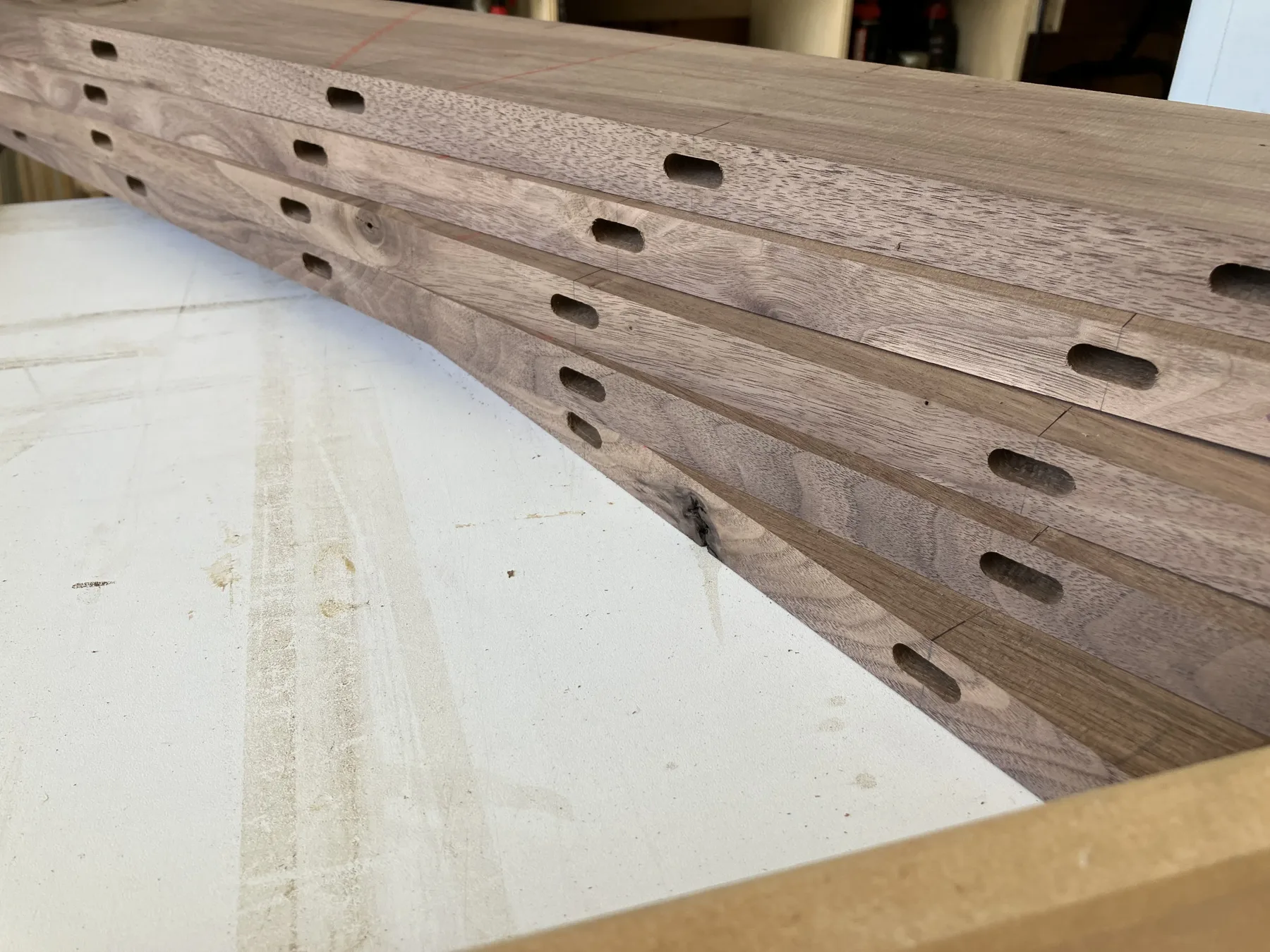
Grain direction is part of the decision. The tenon runs with the grain of the member it’s cut from. On the mortise side, enough material must remain around the cavity to prevent splitting. That’s where proportion and layout matter.
Movement is always present. Wood expands and contracts across width with changes in humidity. Mortise and tenon joints are used in ways that allow for that movement. Fixed joints are placed where they won’t restrict the material. Wide panels are not locked across their width with fixed joinery.
There is no decoration built into the joint. It can be hidden or exposed. When exposed, execution has to be clean—tight fit, square shoulders, no filler. The joint reads as structure, not detail.
Tolerance is tight but practical. The goal is consistent contact, not force. The joint holds alignment, carries load, and stays stable as the material moves. Through wedged on the Hickory, pegged on the Penn, blind on the Coffee Table and the Vanities. The variant changes with the piece. The joint does not.