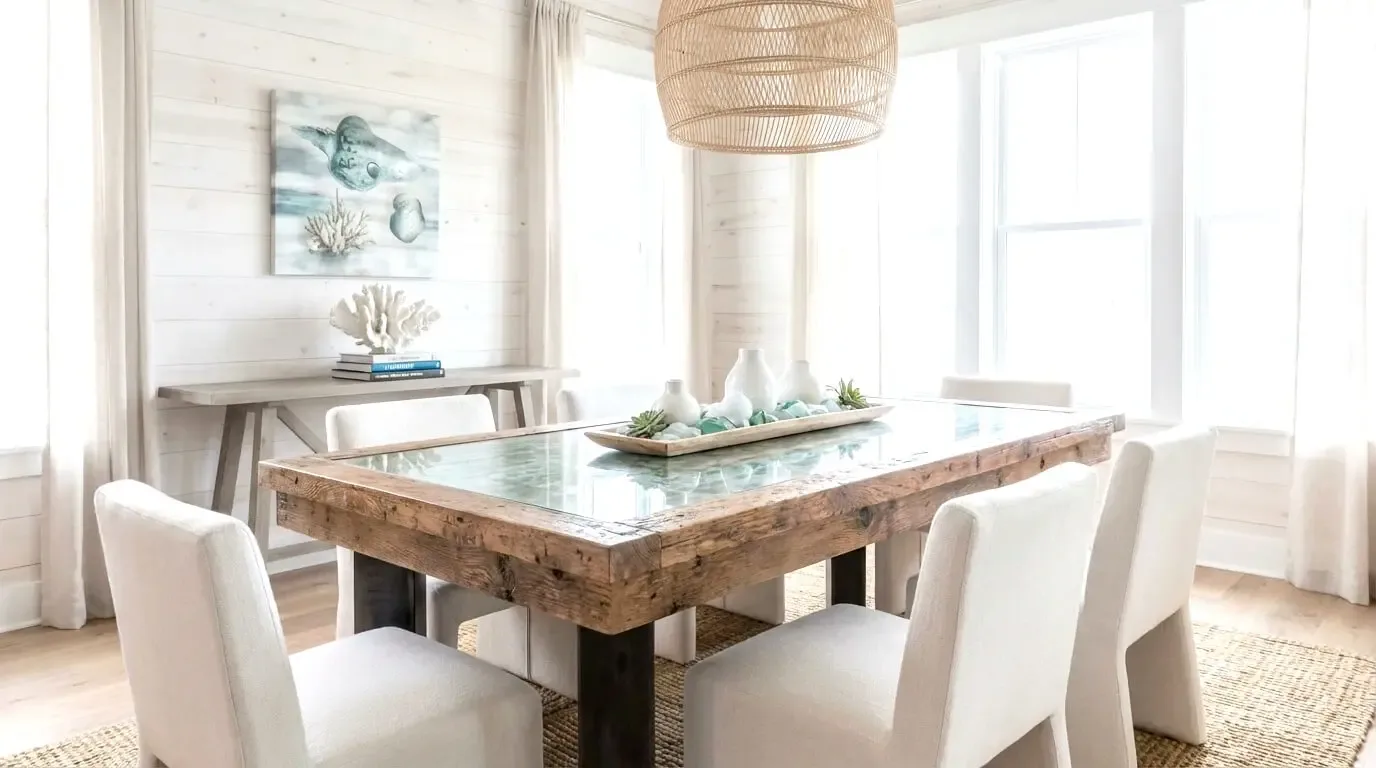
Standing amongst those newly made and painted, this was the derelict.
Yet it had to be hers. It carried a message — never gone. The door deserved possession, but it was the buyer who felt they deserved the door. The question was whether it could be used or whether it would simply sit.
The door could not be altered, and it could not carry load.
Layers of paint had built and worn back over time, exposing earlier surfaces in irregular patches, while the structure underneath had moved enough that it could not be relied on for flatness or stability. It was not a usable table surface in any conventional sense, and any attempt to bring it into alignment would have removed the very condition that made it worth building around.
The working surface is separated from the material through layered construction, not through correction. The piece is built in section.
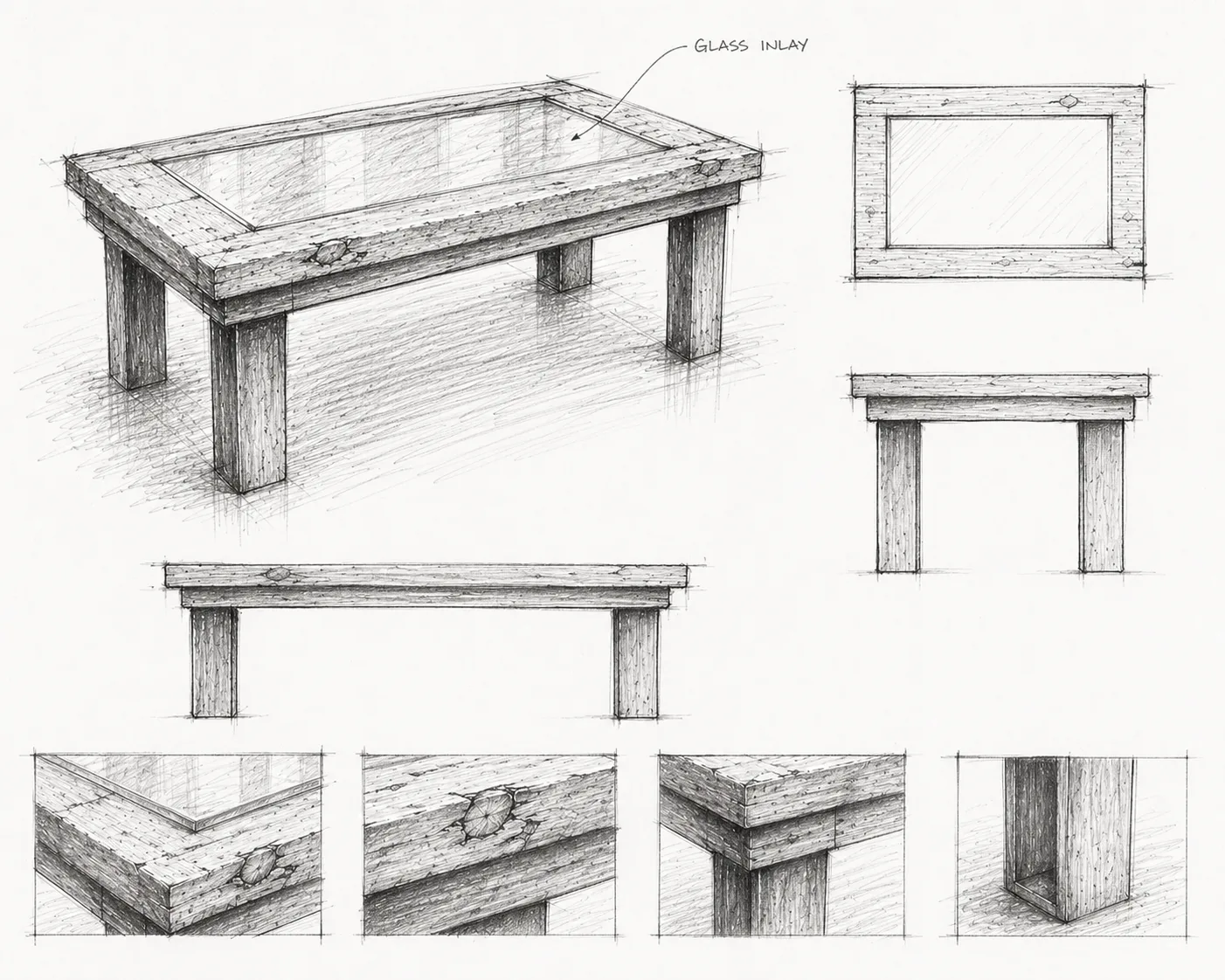
A wood frame defines the plane of the table, while the door is set below it, recessed seven-eighths of an inch so that it remains visible without participating in the structure. A half-inch tempered glass panel rests on the frame, taking all functional load while allowing the surface below to read continuously.
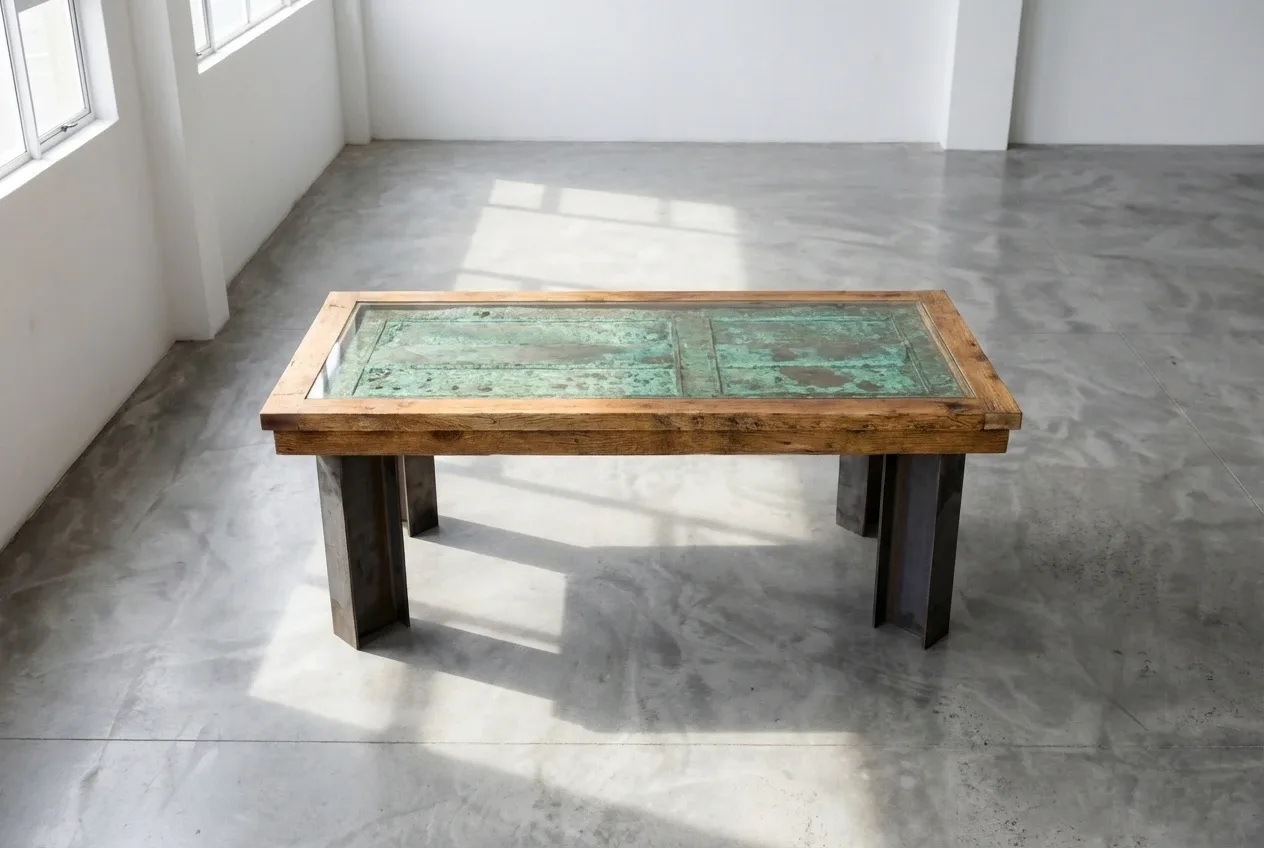
Each layer carries a specific role. The glass receives use. The frame holds alignment and dimension. The door remains intact beneath both, neither flattened nor forced into compliance.
The internal frame carries the structure through mortise and tenon joinery — each tenon passes fully into its mortise, registering at the shoulder, transferring load across long grain surfaces that resist movement over time. Once seated, the frame holds square and establishes the plane the glass depends on.
Below that, the base takes over.
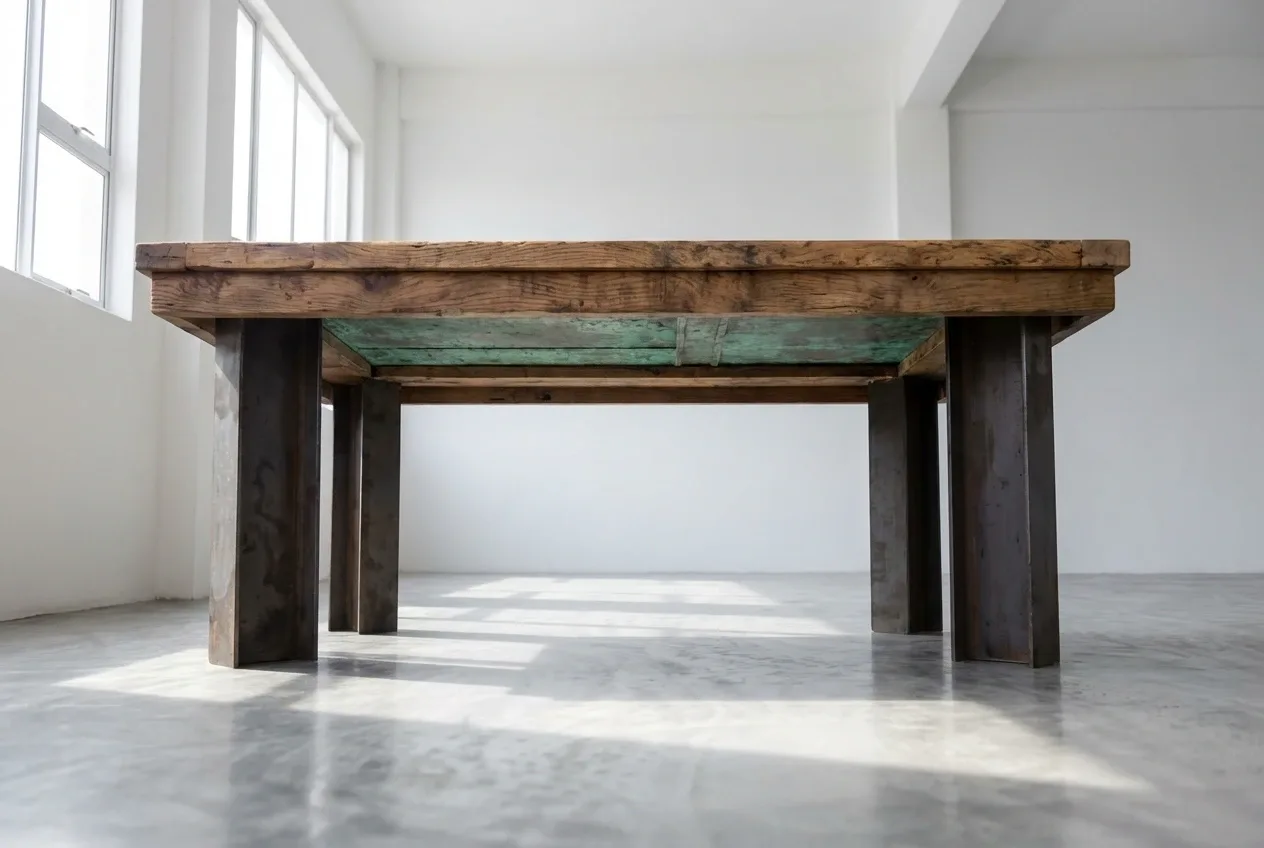
Salvaged steel sourced from a local metal artist shop in San Diego is cut, welded, and bolted to the underside of the frame, with fasteners driven upward into fixed points that allow the piece to be disassembled if it needs to move. The load is carried without asking anything of the door.
Failure shows up immediately
If the frame is not true, the glass reveals it. If the recess is inconsistent, the door reads as misaligned rather than held. If the structure is forced into the door rather than built around it, the surface is lost. The door is the reason the piece exists. There is no recovery after assembly that brings it back.
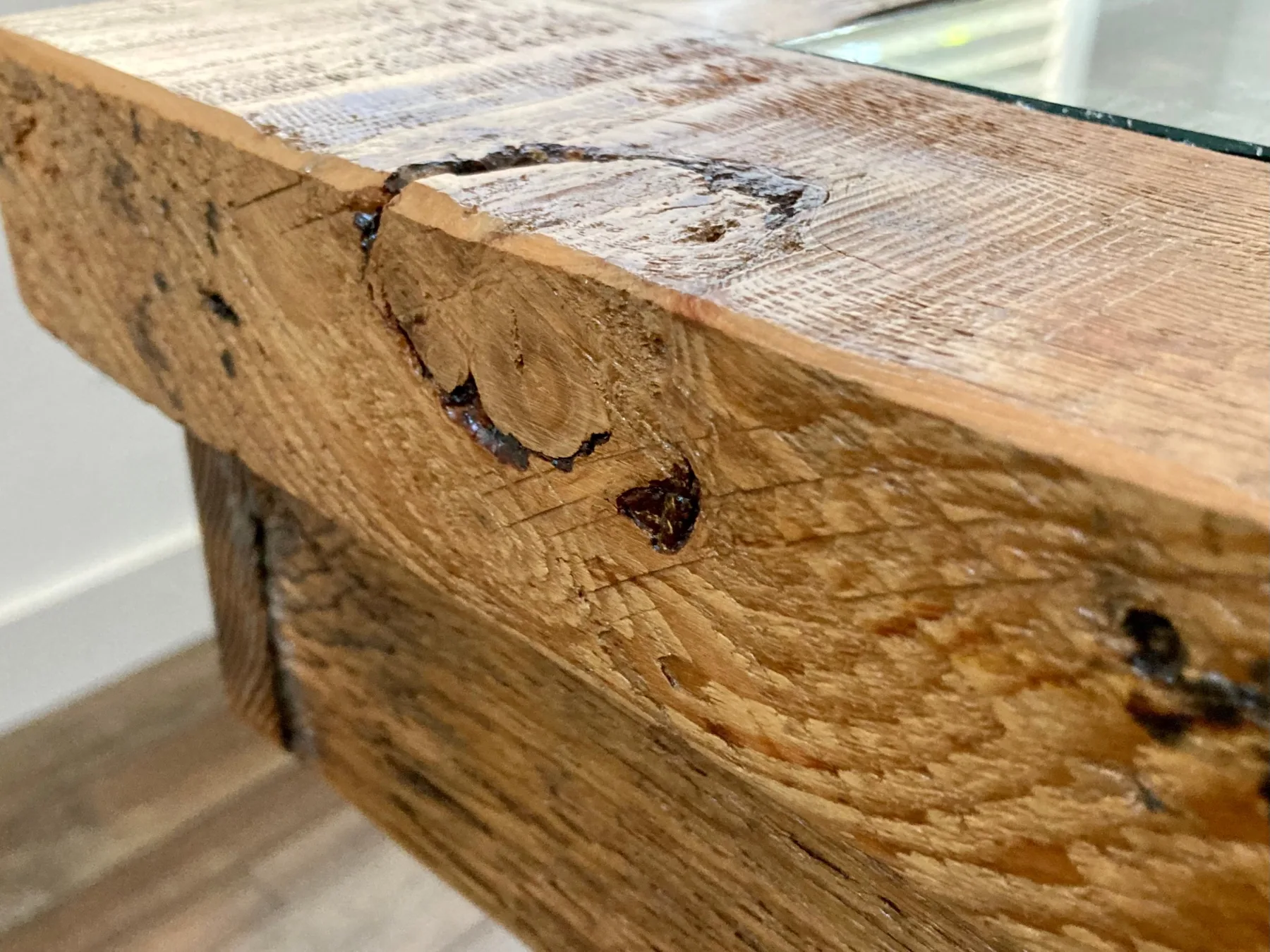
The frame stock is pulled for stability and tone, not to match the door, but to sit alongside it without conflict. Grain is read for how it will hold straight edges across length, and boards are arranged so that the field above the door remains quiet enough to let the surface below carry the work.
The trim band resolves the edge condition between frame and door, holding a narrow perimeter that separates the two without interrupting either. Each copper inlay is carved by hand into that band. A cavity is cut to depth, slightly undersized to the inlay itself, and the copper is driven in, compressing into the surrounding wood and holding without adhesive. The surface is brought flush after set, leaving the metal registered in place rather than sitting on top of it. Placement follows the breaks in the door's surface — spacing shifts to respond to where the paint opens and closes — so the inlays sit in dialogue with what is already there rather than imposing a repeat across it.
The dimension of the table follows the material directly — seventy-eight by thirty-six at thirty inches high — set by the door itself rather than imposed from outside. Nothing is adjusted to meet a standard size. The piece resolves to what was brought in.
It sits in Temecula, set for six and in daily use. The glass carries the work above, while the door remains exactly what it was when it was found — unchanged, visible, and held beneath it.
- Surface
- ½" tempered glass
- Door
- Salvaged, recessed ⅞"
- Frame
- Mortise and tenon
- Base
- Salvaged steel, bolted
- Inlay
- Hand-cut copper
- Dimensions
- 78" × 36" × 30" H