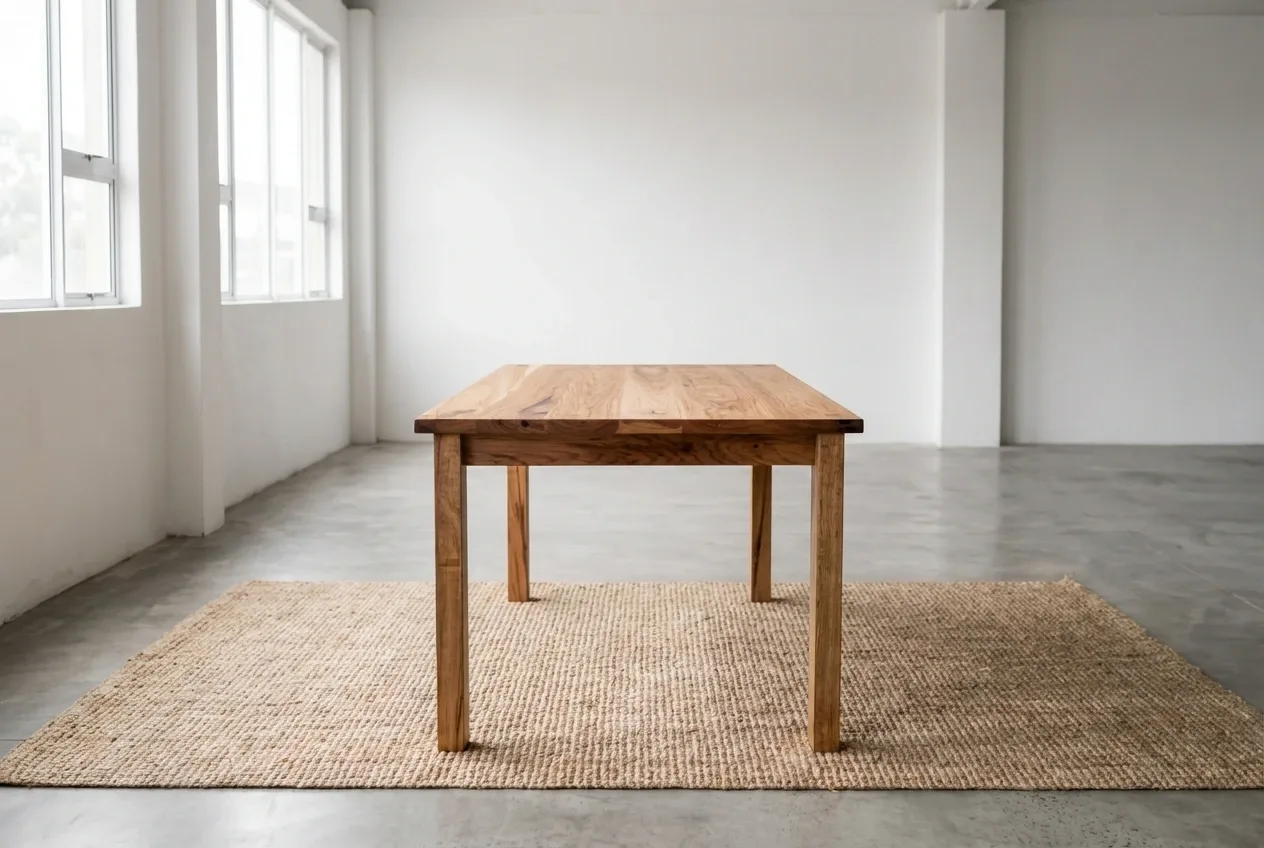
Hickory does not settle on its own.
The grain shifts hard from board to board — light to dark, straight to wild, calm to broken without warning. It carries tension through the cut. It moves when it's opened. It resists being brought into alignment and shows it when you try.
That sets the work.
Boards are not selected for similarity. They are selected for how they will resolve together. The read happens before the first cut — where the grain runs, where it breaks, how color moves across the length. The goal is not matching. It is continuity.
The top is built as a continuous field. Each board is placed to carry the movement of the grain across the surface rather than interrupt it. Light transitions into dark without hard stops. Grain lines shift direction without breaking the read. The seams close, but they do not disappear. They hold the alignment of the boards without flattening them into something uniform.
That condition is not achieved at glue-up. It is set at layout.
Milling follows that decision. Hickory requires control through each pass. It will tear if rushed, chip if forced, and move if taken too far at once. Faces are brought true, but the material is allowed to settle between steps. What it gives back determines the next move. You do not chase it to dimension in one pass. You bring it in stages and hold it there.
The vibrant grain of Hickory carries the visual weight of the table. The panel is built to show what the material can do.
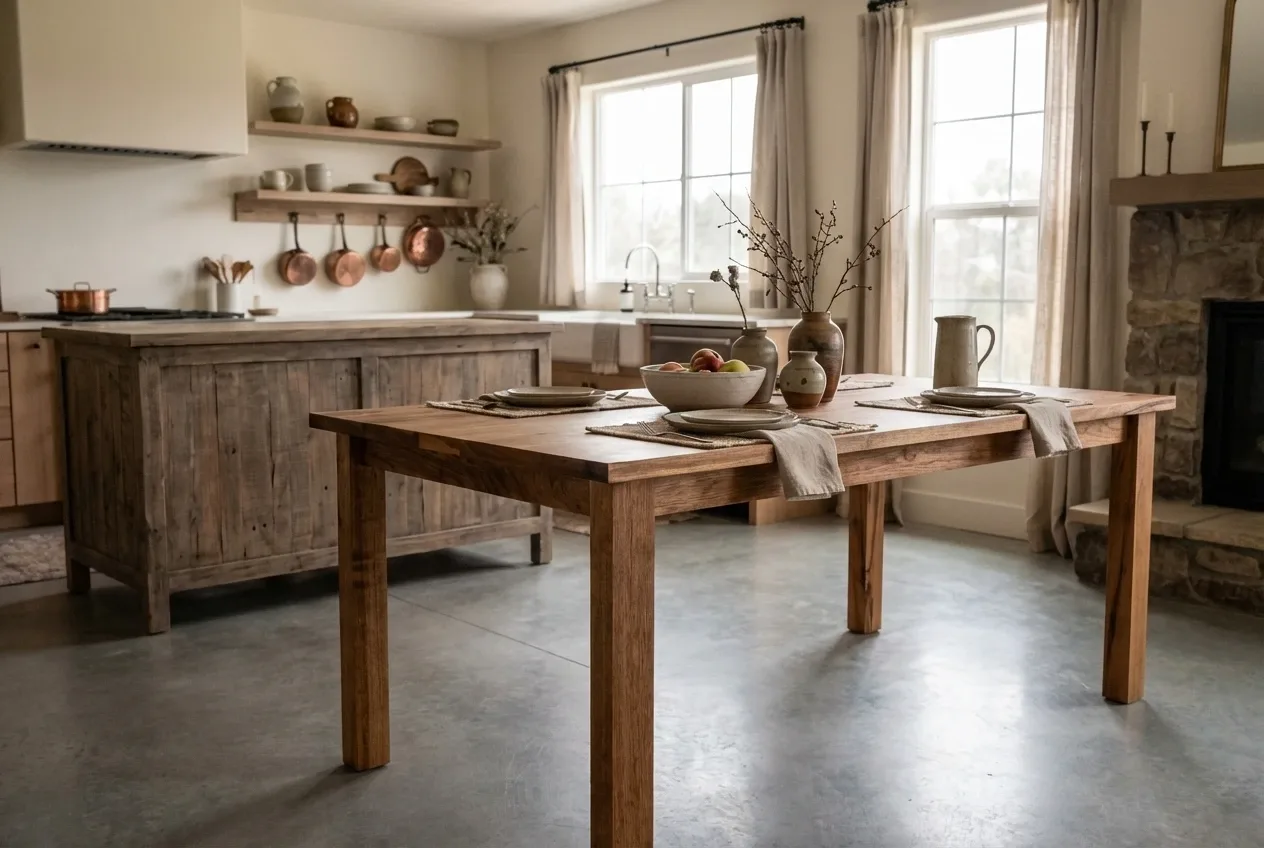
The base
Traditional aprons are mortised and tenoned into square farmhouse-style legs, which are then pronounced through the surface top using through-wedged mortise and tenon joints. The through-wedged are not to be confused with the former. These joints become the structural anchor securing the top to the base, and an accent detail at the same time — a show in how design and form come together, a visual break in the vast top, allowing something else to be briefly noticed.
Each leg is made with a center tenon piece. This passes through the top, and what is left is a small gap on each side of the tenon. That gap is then replaced with the wedge piece. Driven in at the correct size, the joint expands under that pressure, fixing the connection mechanically. Fit is set before the wedge is introduced. Once driven, the joint is locked. There is no adjustment after that point.
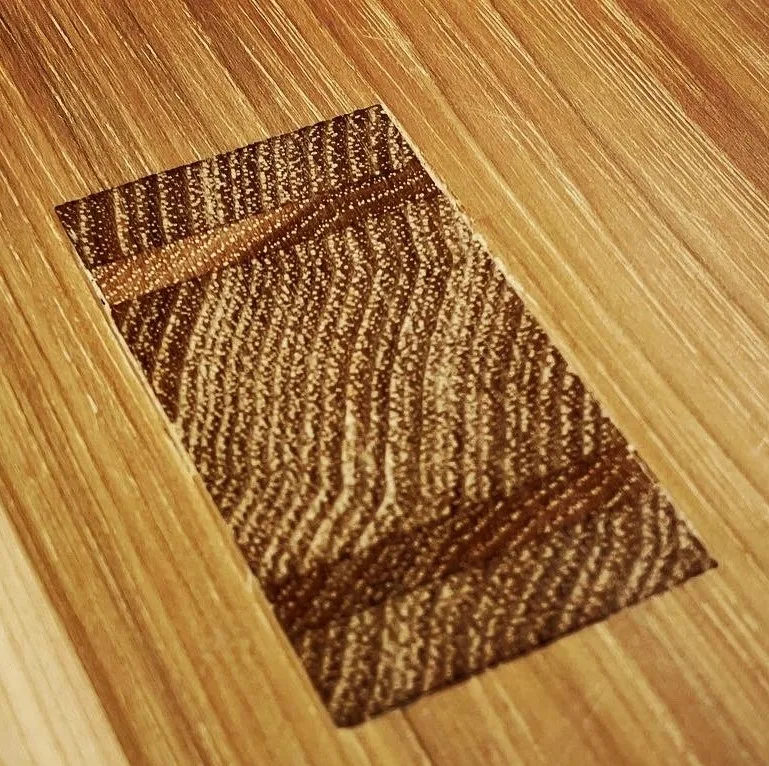
These joints now sit proud of the top surface, flush cut and sanded smooth. Assembly completed with a beautiful detail showcasing the work that makes the table structurally sound beyond standards.
Hickory demands the maker
It is one of the densest domestic hardwoods. It cuts cleanly with sharp tooling but punishes dull edges quickly. The same density that makes it durable under daily use also makes it unforgiving in the shop — joinery has to be done correctly the first time. There is less margin to recut and refit than there is in softer species. Where and how you cut with Hickory will determine if the piece continues in the progression of the build. A wrong decision means tearout, fixing time on a material that does not want to permit it, or removing that piece completely and replacing it — and the color, grain, and heartwood need to match.
Dimensions were resolved to the room. Sixty by thirty-six at twenty-nine inches high. A one and a quarter inch top. No extension, no break in the field. The footprint carries dining scale without pushing the space.
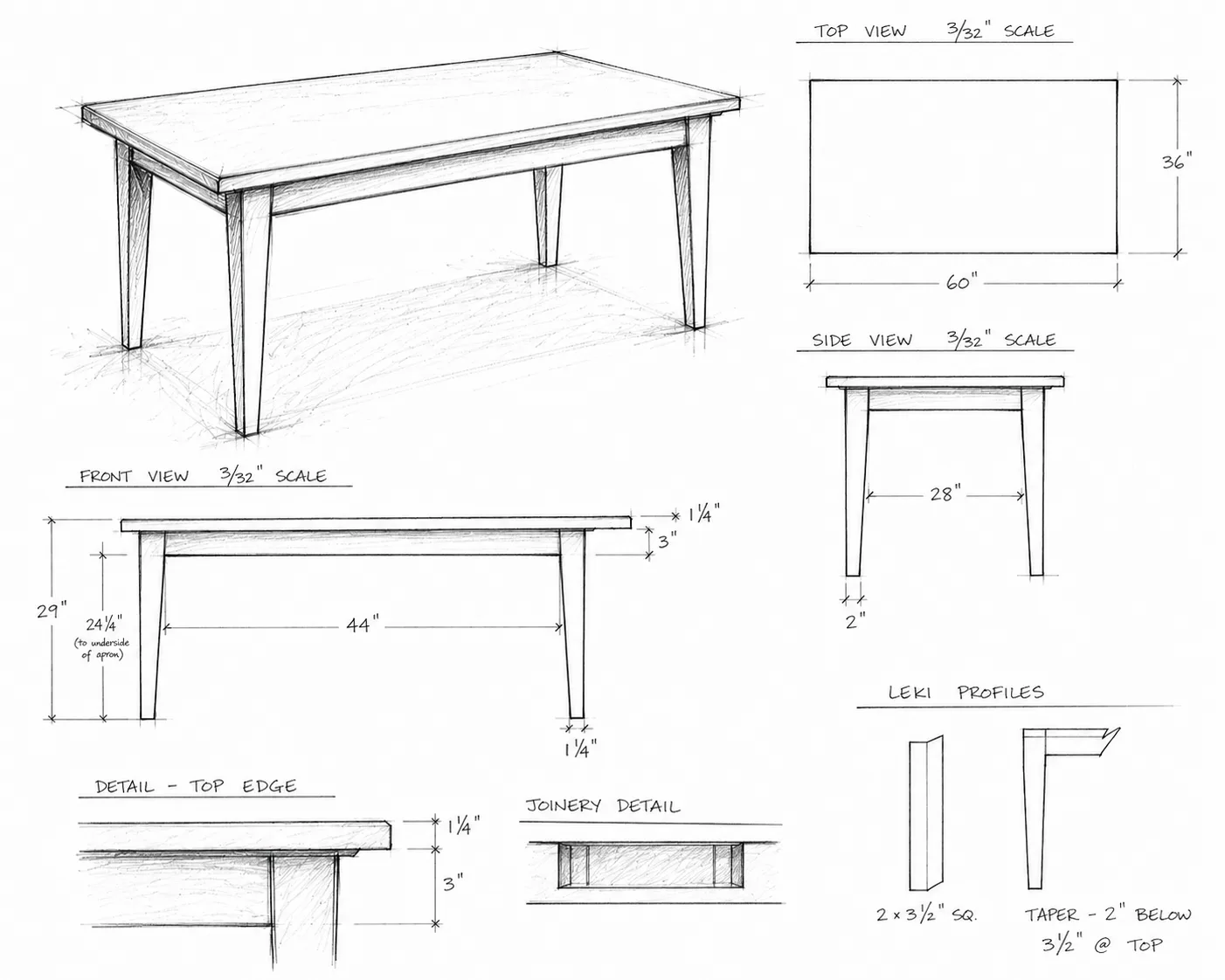
A natural oil finish, applied and given time to cure. No stain. Nothing added to unify the color. The surface is allowed to read as it was built — variation intact, grain forward.
The table sits in a Carlsbad dining room. The grain runs the length. The wedges register at the corners. The contrast is not softened. It is placed.
- Wood
- Hickory
- Top
- 1¼" solid, no extension
- Joinery
- Through-wedged mortise and tenon
- Base
- Square legs, mortised aprons
- Finish
- Natural oil, no stain
- Dimensions
- 60" × 36" × 29" H