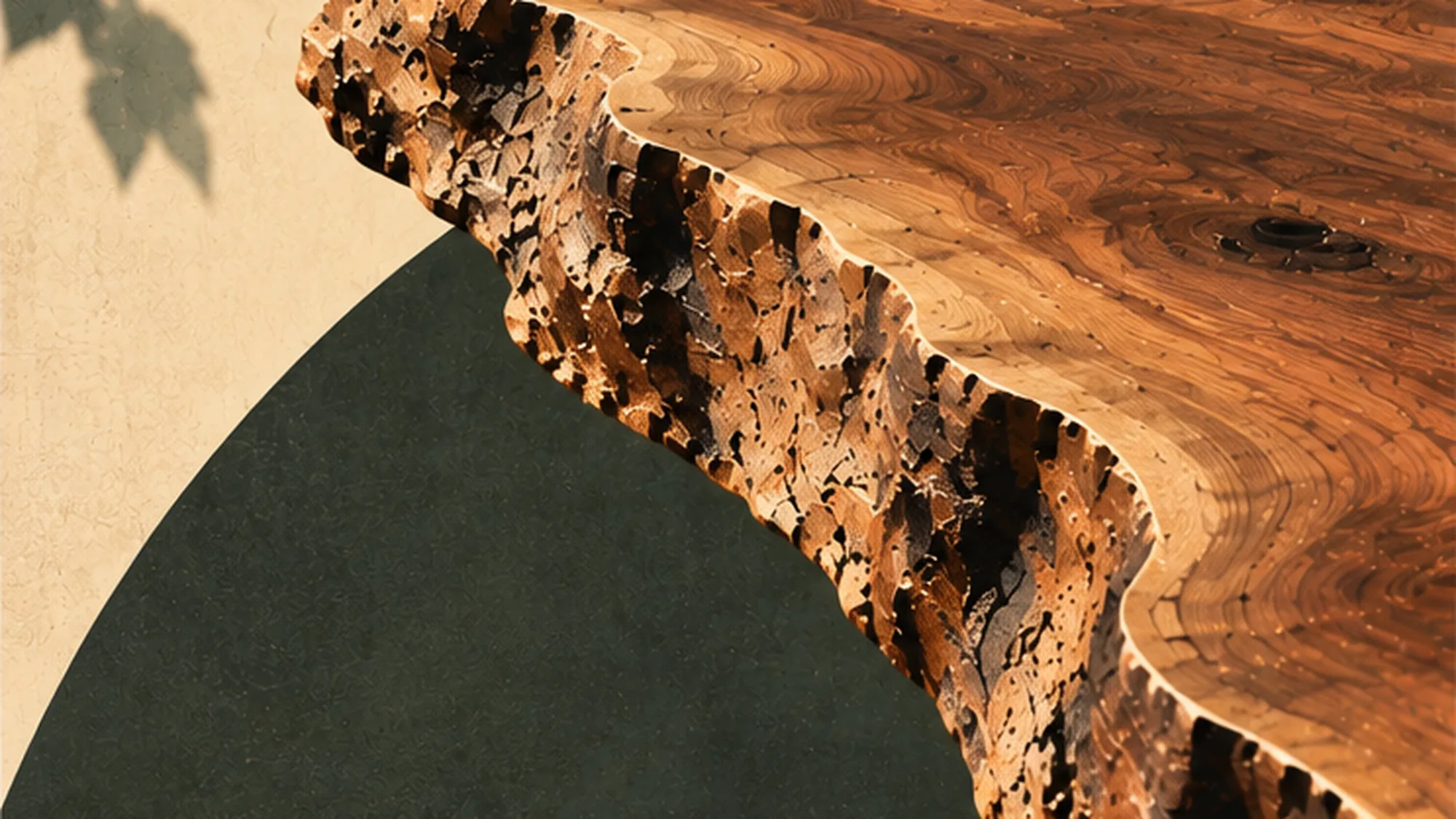
We have built a few small live edge pieces over the years, and for a long time that was as far as we went. The honest reason is stubbornness. Live edge looked like a trend, and we stayed away from it.
The history says otherwise. A live edge is the outer edge of the board left the way the tree grew it. Furniture makers worked with natural edges long before anyone called it a trend. In the modern era, the name most tied to it is George Nakashima. Born in Spokane in 1905 and trained as an architect at MIT, he learned woodworking from a Japanese carpenter while held in an internment camp during World War II. In 1945 he opened his shop in New Hope, Pennsylvania. His tables kept the natural edges of burled and knotted slabs, often held together with butterfly joints, and they are still sought after today.
Shop Manual
- The edge
- The outside of the tree, kept the way it grew. The bark usually comes off, since it loosens over time.
- Sapwood
- The lighter band just inside the edge. In walnut it sits pale against the dark heartwood, and that contrast is a big part of the look.
- One of a kind
- Slabs are usually cut straight through the log, so no two match.
- Character
- Knots, burls and cracks are often kept and stabilized, traditionally with butterfly joints across the crack.
- Movement
- A wide slab moves with the seasons, so the base has to let the top move.
- Drying
- Thick slabs dry slowly. The old rule of thumb for air drying is about a year per inch of thickness.
So why do we love them? A live edge shows where the board came from. You can follow the growth of the tree right to the edge of the table, and no two are alike.
Even if the trend falls away, the beauty of a tree in its raw form never goes away.